


The Future of Private Aviation: From Private Jets to eVTOLs
How the next generation of air travel could connect private jets, vertiports and final destinations
For decades, private aviation has represented the ultimate solution to one of the world’s most valuable commodities: time.
Private jets allow travelers to avoid airline schedules, crowded terminals and unnecessary connections. They bring passengers closer to their destinations and provide a level of flexibility that commercial aviation simply cannot match.
But even private aviation has a limitation.
A private jet can take you from Miami to New York, London or Los Angeles in a matter of hours. Yet once the aircraft lands, the journey is not necessarily over. The final destination may still be 30, 50 or even 100 miles away — and the drive between the airport and the city can take longer than the flight itself.
This is where the next chapter of aviation may begin.
The future of private aviation may not be about choosing between a private jet and an eVTOL. It may be about using both — seamlessly.
From Airport-to-Airport to Door-to-Door
The traditional model of private aviation is relatively simple:
Home → FBO → Private Jet → FBO → Car → Final Destination
It is already dramatically more efficient than the commercial aviation experience.
But imagine a different model:
Home → FBO → Private Jet → Vertiport → eVTOL → Final Destination
Instead of treating the private jet as the entire transportation solution, the aircraft becomes one component of a much larger mobility network. Electric vertical takeoff and landing aircraft — commonly known as eVTOLs — have the potential to connect airports, urban centers, resorts, business districts and other locations that may not have conventional runways.
The FAA is already working toward this future. In 2026, the agency launched its eVTOL Integration Pilot Program (eIPP), designed to accelerate the safe integration of Advanced Air Mobility aircraft into the U.S. National Airspace System through partnerships between government and private industry. The objective is not simply to create another type of aircraft. It is to create another layer of transportation.
Why eVTOLs Could Complement Private Jets
There is sometimes a perception that eVTOL aircraft will compete directly with private jets. In many cases, the opposite may be true.
A large-cabin business jet is designed to efficiently move passengers over hundreds or thousands of miles. An eVTOL is better suited to shorter segments where access, flexibility and vertical takeoff and landing can provide a significant advantage. Consider a traveler flying privately from Miami to another major city. The private jet handles the long-distance portion of the journey.
After landing, however, the passenger may still need to travel across a congested metropolitan area. Instead of spending another hour or two in ground transportation, an eVTOL could potentially connect the airport or nearby vertiport with a location much closer to the passenger’s final destination. The result is not necessarily a faster aircraft. It is a faster journey. And that distinction is extremely important.
The New Value of Time
Private aviation has always been about more than speed. It is about controlling time. A private aircraft allows a business executive to leave when needed, visit multiple cities in a single day and return home without being constrained by airline schedules. eVTOL technology could take this concept one step further by reducing the amount of time spent traveling between airports and final destinations. In other words, the next evolution of private aviation may be measured not by cruise speed, but by total door-to-door travel time. For high-value travelers, that can be the most important metric of all.
Saving 30 minutes may sound insignificant until that same 30 minutes is saved several times a week, across dozens of business trips. Over the course of a year, the value becomes substantial.
Vertiports: The Missing Piece
For eVTOLs to become a meaningful part of private aviation, aircraft development is only one part of the equation. Infrastructure will be equally important. Airports, FBOs, heliports and dedicated vertiports will need to become interconnected parts of the same transportation ecosystem. The FAA has already established initial vertiport design standards and expects early Advanced Air Mobility operations to make use of existing infrastructure where possible, alongside the development of dedicated vertiports and vertistops. This creates an interesting opportunity for the business aviation industry. FBOs could eventually become more than places where private jets arrive and depart. They could become multimodal aviation hubs. A passenger could arrive on a Gulfstream, Global, Falcon or Challenger, transfer directly to an eVTOL and continue toward a destination that would otherwise require significant ground transportation. The FBO would effectively become a connection point between different layers of aviation.
Miami and Other Major Business Aviation Markets
Markets such as South Florida illustrate why this concept is particularly interesting. Miami is not simply an international business aviation gateway. It is also a highly congested metropolitan region with a large concentration of business, hospitality, residential and leisure destinations spread across a relatively large geographic area. A private aircraft can eliminate the airline portion of the journey. An eVTOL network could potentially address the ground-transportation portion. The same concept could eventually apply to other major business aviation markets around the United States and internationally. Los Angeles, New York, Dallas, London, Paris, Dubai and other major metropolitan areas all share a similar challenge: the distance between an airport and the passenger’s actual destination can represent a significant portion of the total travel time. The FAA is already studying real-world eVTOL operating scenarios at major airports. Its 2026 assessment work at Los Angeles International Airport, for example, examined how eVTOL operations could interact with conventional aircraft and airport traffic. This is an important shift.
The conversation is moving from “Can these aircraft fly?” toward “How do we integrate them into the aviation system?”
The Technology Is Advancing — But the Industry Must Stay Realistic
The future of eVTOL aviation is promising, but it is important to distinguish potential from full-scale commercial deployment. Certification, airspace integration, infrastructure, charging, operational procedures, pilot training, public acceptance and economics all have to come together. That process takes time. The FAA’s current programs demonstrate that regulators and industry are actively working through these challenges rather than simply waiting for the technology to mature on its own. In 2026, the agency has already supported demonstrations involving hybrid-electric aircraft, medical transportation and other Advanced Air Mobility applications. For the business aviation industry, this is an important period to watch. The companies that understand the infrastructure and operational implications early may be better positioned when the technology reaches broader commercial maturity.
Private Aviation Is Becoming an Ecosystem
The most interesting development may ultimately be that the future of private aviation will not belong to a single type of aircraft. It will belong to an ecosystem. Long-range business jets will continue connecting continents and major cities. Midsize and super-midsize aircraft will continue serving regional markets. Helicopters will continue providing flexible short-distance transportation. And eVTOL aircraft may eventually occupy another space in the network connecting airports, vertiports and final destinations. Each aircraft type would do what it does best. The result could be a transportation system designed around the passenger rather than around the aircraft.
What This Could Mean for Private Jet Travelers
For passengers, the ultimate benefit is simple:
Less time between leaving home and reaching the final destination.
Instead of thinking about a trip as a sequence of separate transportation segments, the industry can begin thinking about it as one continuous journey. A passenger should not necessarily care whether the first segment is flown on a Gulfstream, the second on an eVTOL, and the final connection is handled by another form of transportation. What matters is that the journey is efficient, reliable and seamless. This is the direction in which premium transportation is moving. The question is no longer simply:
“How fast can we fly?”
The more important question is:
“How quickly can we get the passenger where they actually need to be?”
Liberty Charters and the Future of Air Travel
At Liberty Charters, we see enormous potential in the development of eVTOL technology and Advanced Air Mobility.
Private aviation has always been about giving clients more control over their time and making travel more efficient. eVTOL aircraft could extend that philosophy beyond the airport, helping passengers reach their final destinations significantly faster in an increasingly time-sensitive world.
We believe the most exciting future is not one in which eVTOLs replace private jets. It is one in which they complement them.
As vertiports become more widespread and Advanced Air Mobility networks develop, passengers could eventually move seamlessly between private jets and eVTOL aircraft — combining the range and comfort of business aviation with the flexibility of vertical transportation.
For Liberty Charters, this represents more than a new aircraft category. It represents a new way of thinking about private travel.
The future of private aviation will not simply be about flying farther.
It will be about getting there faster — from departure to final destination.
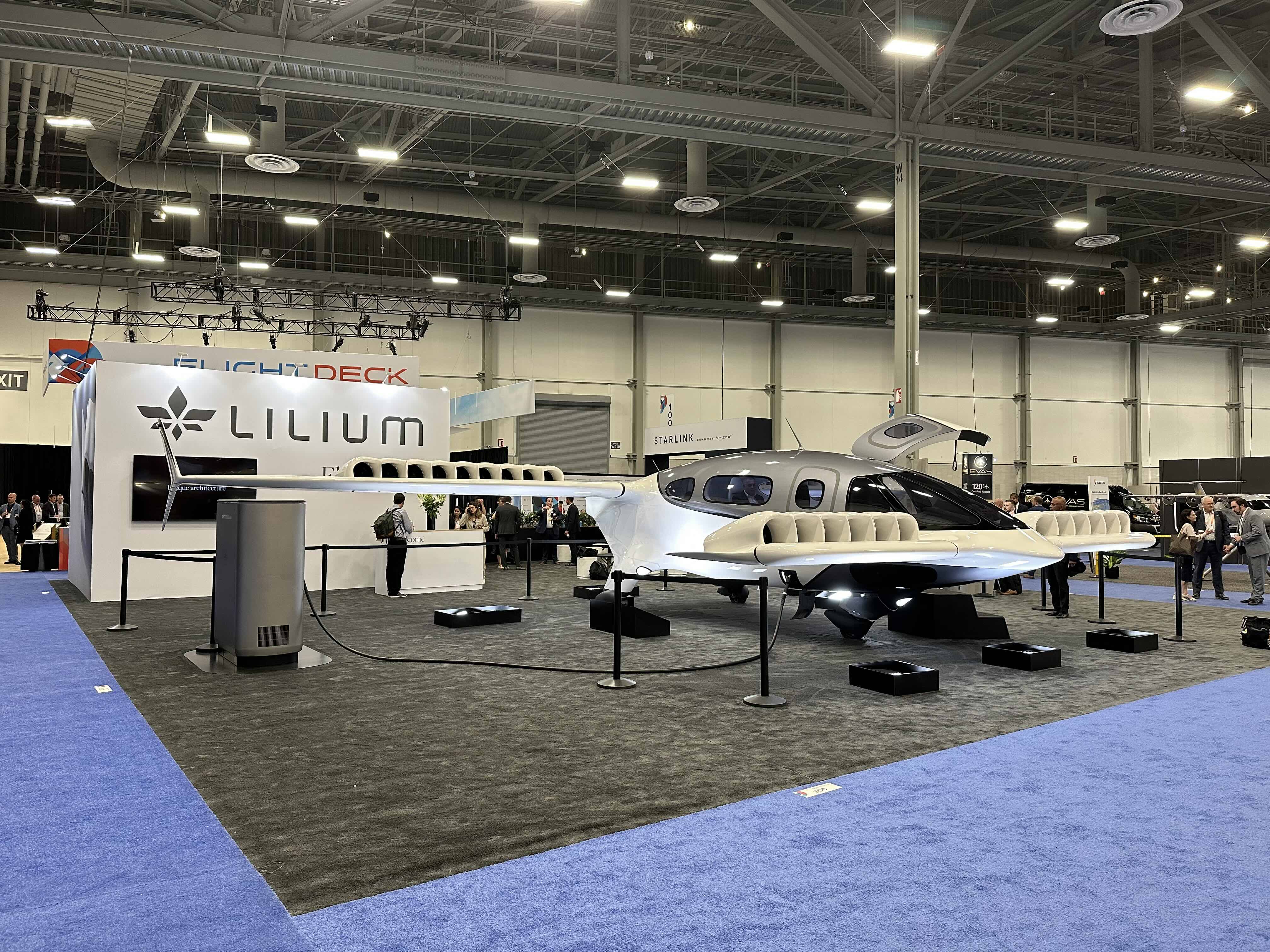
eVTOL Vertiport

Business aviation market 2025 vs 2026

High-speed internet access is quickly becoming a standard expectation in business aviation

Gulfstream G800. World Speed Record
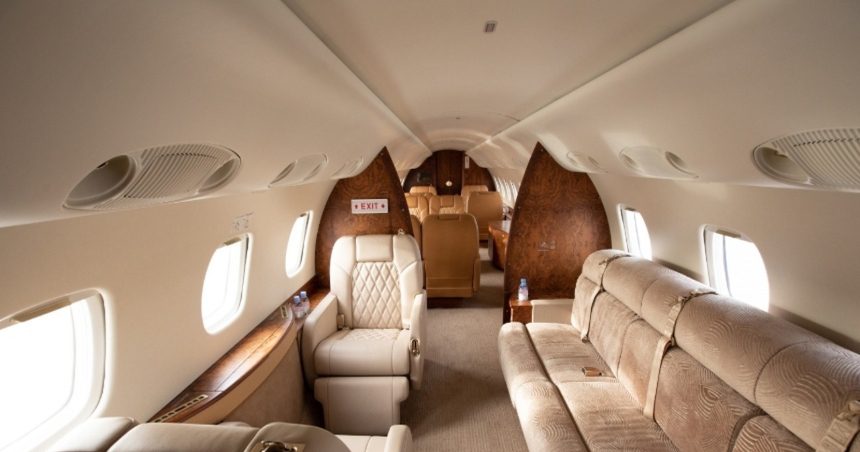
Driving Business Success Through Efficiency, Flexibility, and Productivity